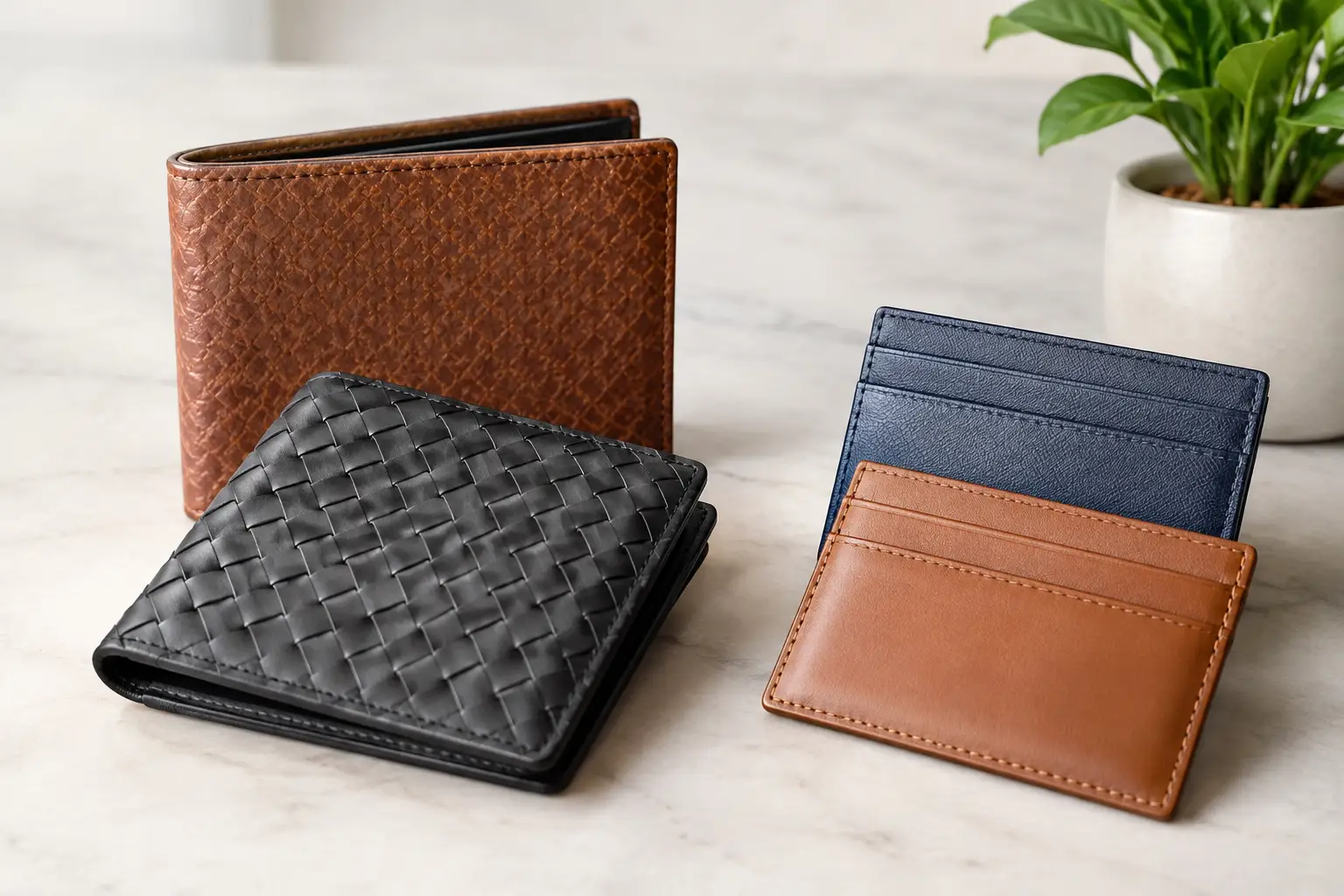
A compact leather project can still ask a lot of your hands. When choosing a wallet pattern versus cardholder pattern, the real question is not which one is better. It is which build gives you the right balance of function, construction practice, and bench time. Both can become everyday pieces you will be proud to carry or give away, but they ask for different decisions before the first cut.
A cardholder is often the faster path to a clean, useful result. A wallet usually offers more room for thoughtful layout work, pocket construction, and a longer build. Knowing where those differences matter helps you choose a design that fits your current skills without outgrowing your interest.
Wallet Pattern Versus Cardholder Pattern: Start With Use
The item’s job should lead the decision. A cardholder is designed for a short stack of cards, sometimes with a center pocket for folded bills. It is slim, easy to carry in a front pocket, and well suited to people who mostly pay by card. Its smaller footprint also makes it a strong handmade gift because the finished piece feels useful without requiring the recipient to change how they carry their essentials.
A wallet is built for greater capacity. Depending on the design, it may hold several card slots, full bills, receipts, a zippered compartment, or coins. A bifold gives the familiar everyday wallet format, while a long wallet or organizer can carry more without folding bills. That added function is appealing, but every pocket, divider, and fold introduces another construction choice.
Think about the intended user before selecting leather. A person who carries six cards and a little cash may appreciate a cardholder more than a thick wallet with unused pockets. Someone who needs full-length bill storage, several cards, and a defined place for receipts will likely find a cardholder too limiting. A well-made piece should simplify what someone carries, not become a handsome object that stays in a drawer.
Capacity Is Only Part of the Decision
Cardholders look simple, yet their capacity depends heavily on pocket design and leather thickness. Two or three layers of firm leather can become bulky faster than expected, especially at folded edges and stitched corners. A pattern with carefully planned pocket overlap helps keep the finished holder trim while still allowing cards to slide in and out comfortably.
Wallets offer more capacity, but they need more restraint. It is tempting to choose a design with every possible pocket. In practice, a wallet packed with compartments may become difficult to close, uncomfortable to sit on, or overly thick once loaded. A good pattern accounts for layers, allowance around the stitch line, and the space needed for cards to flex the leather over time.
This is where material selection matters. A cardholder often benefits from lighter leather in the pocket layers, paired with enough body in the exterior to protect its shape. A wallet may use a similar approach, with a firmer exterior and thinner interior pieces to control bulk. The exact weights depend on the pattern and tannage, so follow the pattern’s recommendations first, then make changes only when you understand how they affect the finished thickness.
Construction Time and Skill Build Differently
For newer makers, a cardholder is usually a more approachable project. You can practice clean cutting, edge preparation, gluing, punching or marking stitch holes, and saddle stitching in a manageable session. If a line wanders slightly or an edge needs more sanding, the project is small enough to correct without losing a full weekend of work.
That does not mean cardholders are effortless. Their small size makes alignment visible. A pocket set even slightly off can look uneven, and a crooked stitch line has nowhere to hide. The lesson is useful: smaller projects reward careful layout, light adhesive application, and patient edge work.
Wallets give you more opportunities to practice construction sequencing. You may need to assemble card pockets before they are attached to a lining, keep multiple pieces oriented correctly, manage folds, and stitch longer runs consistently. These are satisfying skills to develop, especially if you enjoy methodical bench work. They also create more chances to make an error that is difficult to reverse once adhesive is set or stitching is complete.
If you are learning, choose a wallet pattern with a clear assembly order rather than assuming a larger project will teach itself as you go. A workshop-ready layout reduces the guesswork around cut pieces and helps you focus on the leatherwork itself.
Consider Your Tools Before You Commit
Neither project requires a crowded shop, but your available tools can make one choice more practical. A basic cardholder can be completed with a sharp knife, straightedge, cutting surface, adhesive, stitching tools, needles, thread, and edge-finishing supplies. With thoughtful preparation, it is an excellent project for building reliable habits with a modest setup.
A wallet uses much of the same equipment, yet the longer edges and added pockets make consistency more demanding. You may spend more time skiving, trimming, sanding, and burnishing. Certain designs also call for hardware, zippers, or precise crease lines. None of that should discourage you, but it is worth reading the materials list and instructions before buying leather.
Pay particular attention to whether the pattern is made for hand stitching or machine stitching. A hand-stitched wallet can be a rewarding project, but the total stitch length can add several hours. A small cardholder lets you enjoy the same stitch work without committing to a long session. If your available bench time comes in short stretches, that difference may decide the project for you.
Choose by the Experience You Want at the Bench
A cardholder pattern is a good choice when you want a focused build with a useful result. It works well for trying a new leather color, practicing a decorative thread choice, testing a finish, or making several gifts from a modest amount of leather. Repeating the same pattern can also show you how small improvements in cutting and edge work change the final result.
A wallet pattern is a better fit when you want to settle into a more involved project. The larger panels provide room for a handsome exterior, while the interior construction offers satisfying detail. It can be a strong next step after a few smaller builds because it combines familiar skills in a more demanding order.
There is also a practical material question. If you have a smaller hide or several quality offcuts, a cardholder may let you make excellent use of them. If you have a hide with a clean, uninterrupted area you have been saving, a wallet can show off the leather more fully. Inspect the grain, stretch, marks, and temper before laying out the pieces. Put the strongest, cleanest sections where they will be seen and where the design needs structure.
A Simple Way to Make the Call
Choose a cardholder if you want a slim everyday item, a shorter project, or concentrated practice with accurate cutting and finishing. Choose a wallet if the intended user needs more organization, you want to work through layered construction, and you have time for a more deliberate build.
If you are still undecided, consider making the cardholder first. It is not merely a beginner project. It is a useful way to learn how your chosen leather behaves in pockets, folds, and stitched edges. Those observations carry directly into wallet construction and make the next pattern feel far less uncertain.
Will a cardholder stretch enough to hold more cards?
Leather does relax with use, but a cardholder should not rely on stretching to become functional. Build to the intended capacity, use appropriate leather weight, and avoid forcing too many cards into the pockets during the first few weeks. Overstuffing can distort the shape and loosen the pocket retention sooner than you want.
Is a wallet too difficult for a beginner?
Not necessarily. A straightforward bifold with clearly labeled pieces and a sensible assembly sequence can be a good early challenge. The key is to allow enough time for dry-fitting, checking orientation, and finishing each edge before parts become difficult to reach. If you have not yet practiced consistent stitching or edge work, a cardholder can provide valuable preparation.
Can the same leather work for both projects?
Often, yes, but not always in the same thickness across every piece. Leather that makes a handsome wallet exterior may be too thick for stacked cardholder pockets. Patterns that specify leather weight ranges help you plan a finished piece that feels refined in the hand rather than unnecessarily heavy.
The best project is the one you will enjoy carrying through from layout to final burnish. Pick the pattern that suits the person using it, the leather on your bench, and the skills you want to practice next. With a clear plan and careful preparation, either build can become the kind of handmade piece that earns its place in daily use.
Leave a Reply