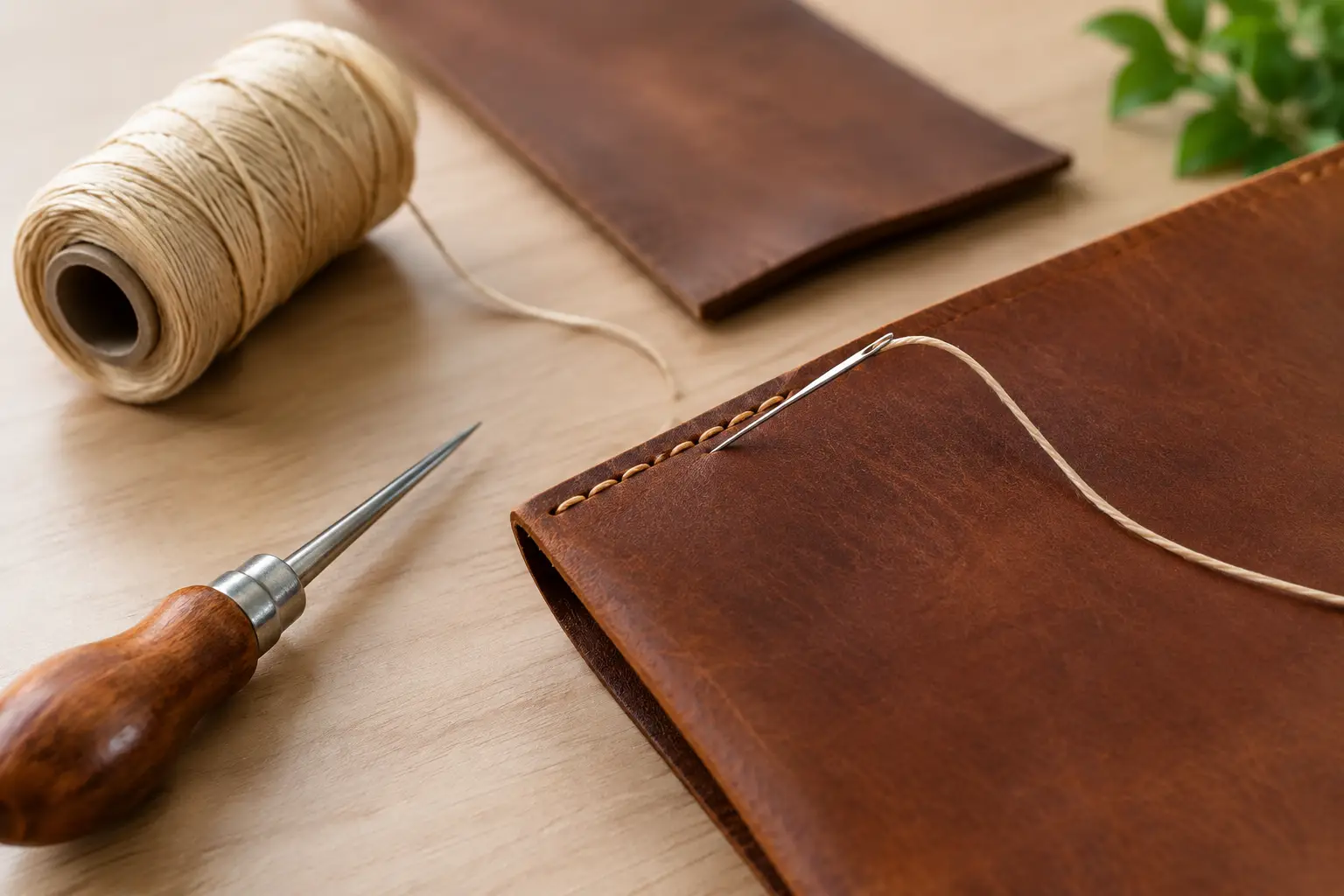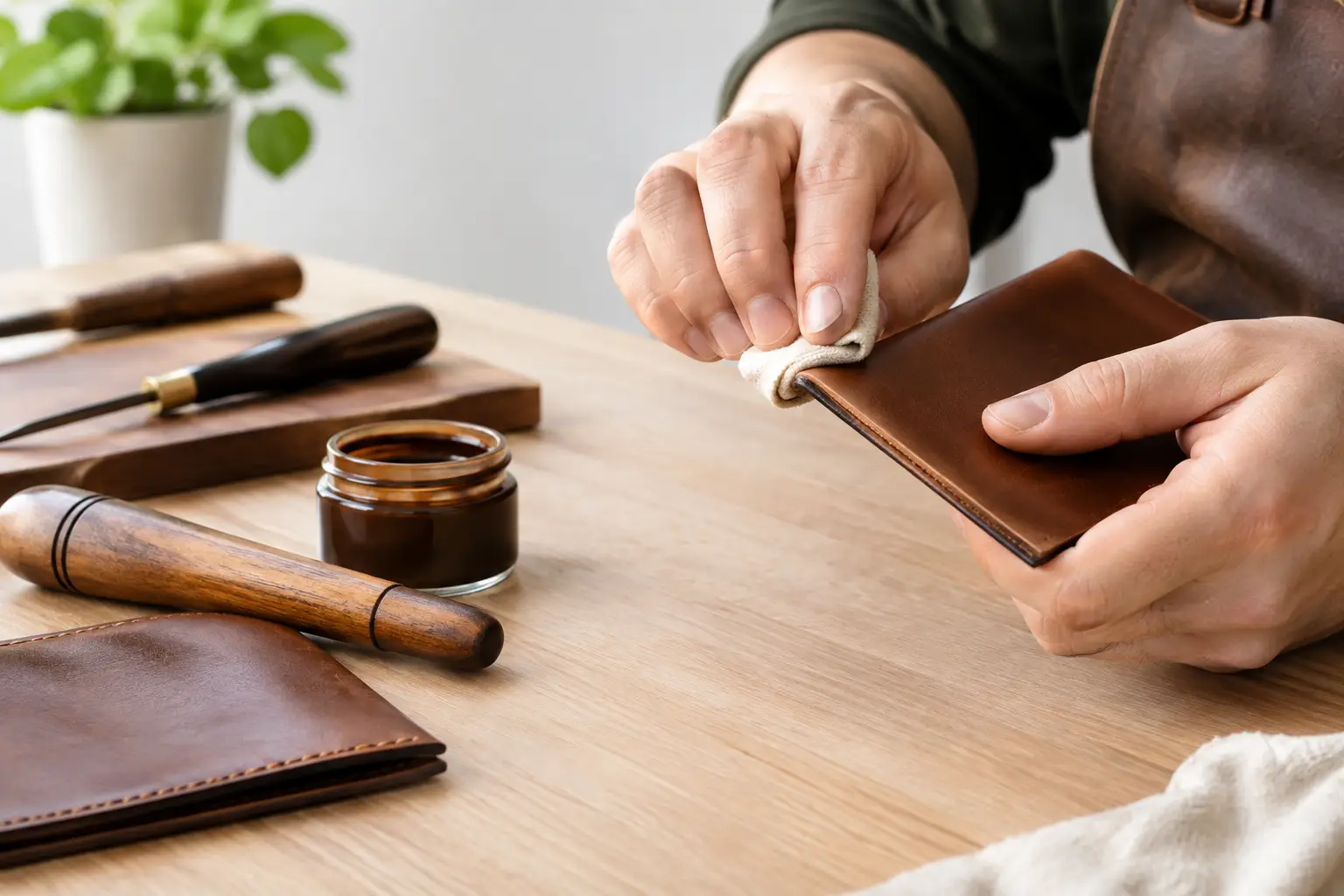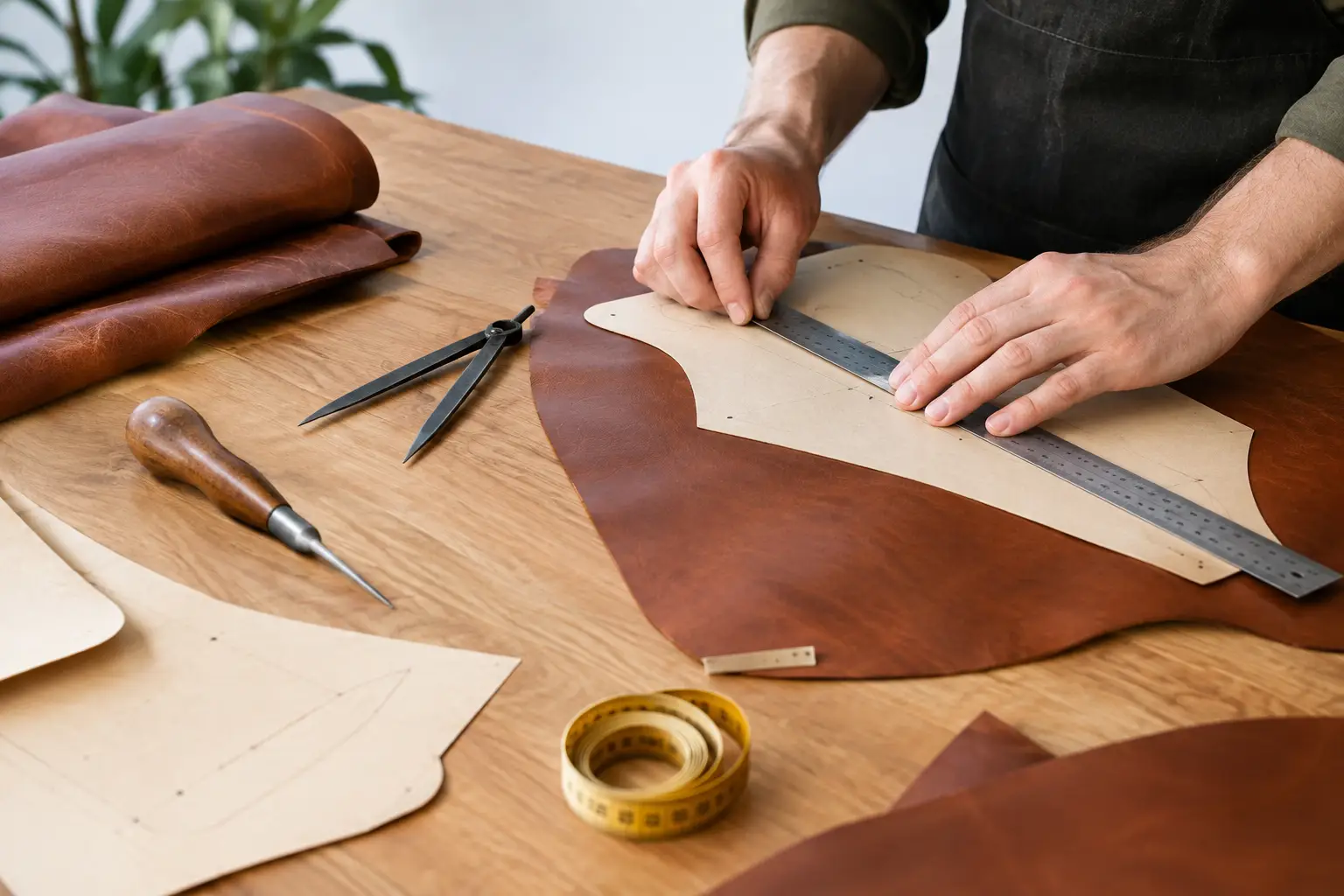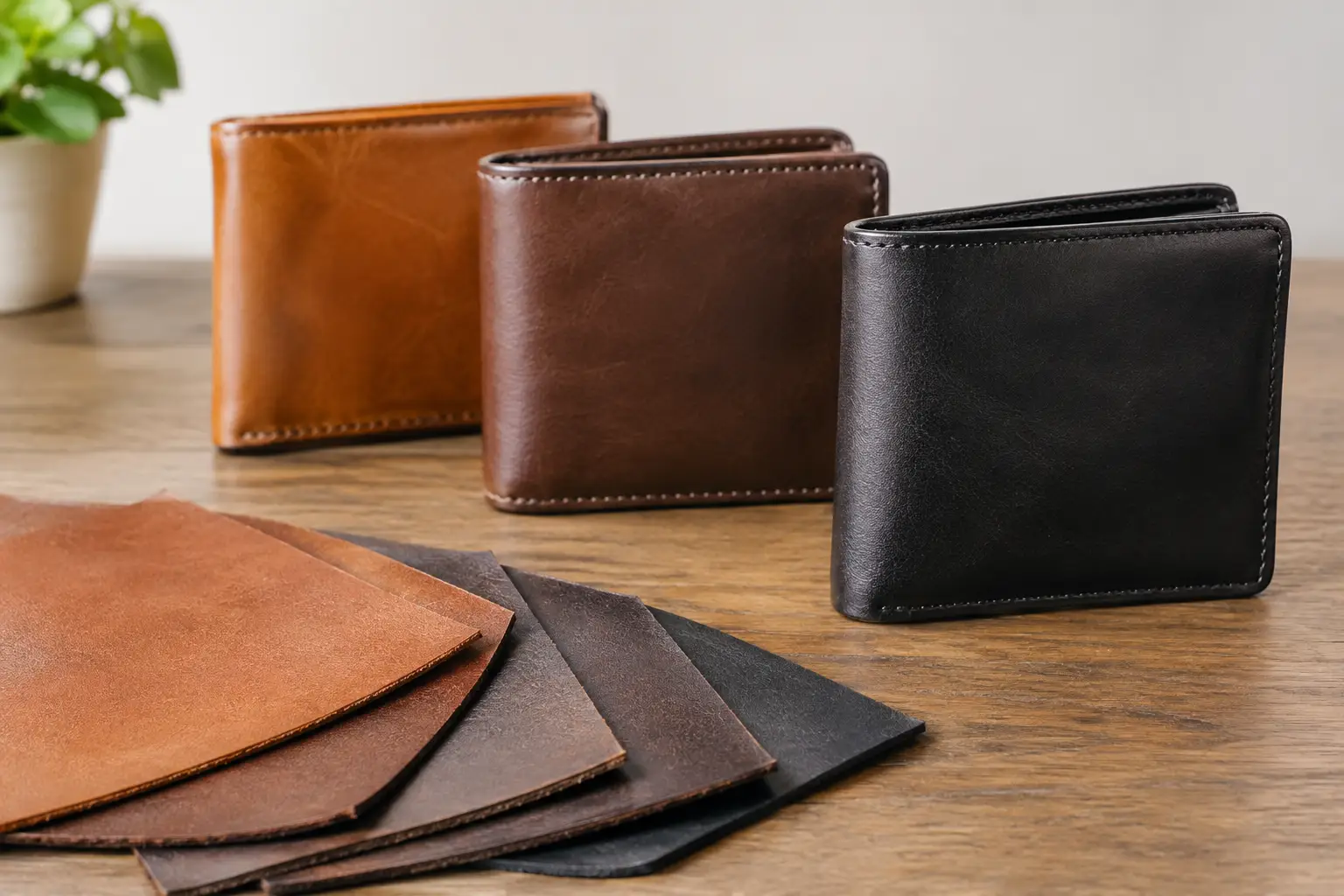
A wallet can look clean on the cutting mat and still feel like a brick once the pockets, lining, thread, and cards are in place. That is why what leather thickness for wallets is one of the first decisions worth making before you cut a pattern. The right weight supports the design. The wrong weight can make a well-planned build difficult to fold, stitch, and carry.
For most handmade wallets, the goal is not simply durability. It is controlled structure: enough body to protect the contents and hold a crisp shape, with thin enough layers that the finished piece stays practical in a pocket.
What leather thickness for wallets should you use?
A dependable starting point is 3 to 4 oz leather for the exterior and 2 to 3 oz leather for interior card pockets. That combination works well for many bifolds, card wallets, and compact designs because it gives the outer shell presence without adding unnecessary bulk inside.
Leather weight is commonly described in ounces, with 1 oz equaling roughly 1/64 inch. Leather is a natural material, so a hide marked 3 oz may not measure exactly the same in every area. Check the actual leather, especially when a project has several layers meeting at one fold or stitched edge.
| Wallet component | Useful starting weight | Why it works | |—|—:|—| | Exterior panels | 3-4 oz | Holds shape and wears well without feeling overly stiff | | Card pockets | 2-3 oz | Keeps pocket stacks manageable and cards easier to use | | Linings or hidden reinforcements | 1.5-2.5 oz | Adds a finished look with minimal thickness | | Heavier utility wallet exterior | 4-5 oz | Works when a more rugged, structured feel is intentional |
These are starting ranges, not fixed rules. A minimalist card holder may use 2 to 3 oz leather throughout. A larger bifold with a cash sleeve may need a slightly firmer exterior or a thoughtful reinforcement at the fold. Let the intended shape, pocket count, and leather temper guide the final choice.
Thickness is about the full stack, not one panel
The most common wallet mistake is choosing a reasonable leather weight for each individual piece but overlooking what happens when those pieces overlap. A 3 oz exterior sounds moderate. Add a 2 oz lining, two 2 oz card pockets, thread, folded edges, and a few stored cards, and the result can become noticeably thick.
Look closely at the areas where layers meet. Card-pocket bottoms, center folds, gusseted sections, and perimeter seams deserve the most attention. If a pattern calls for multiple pocket tiers, thinner pocket leather often matters more than making the exterior lighter.
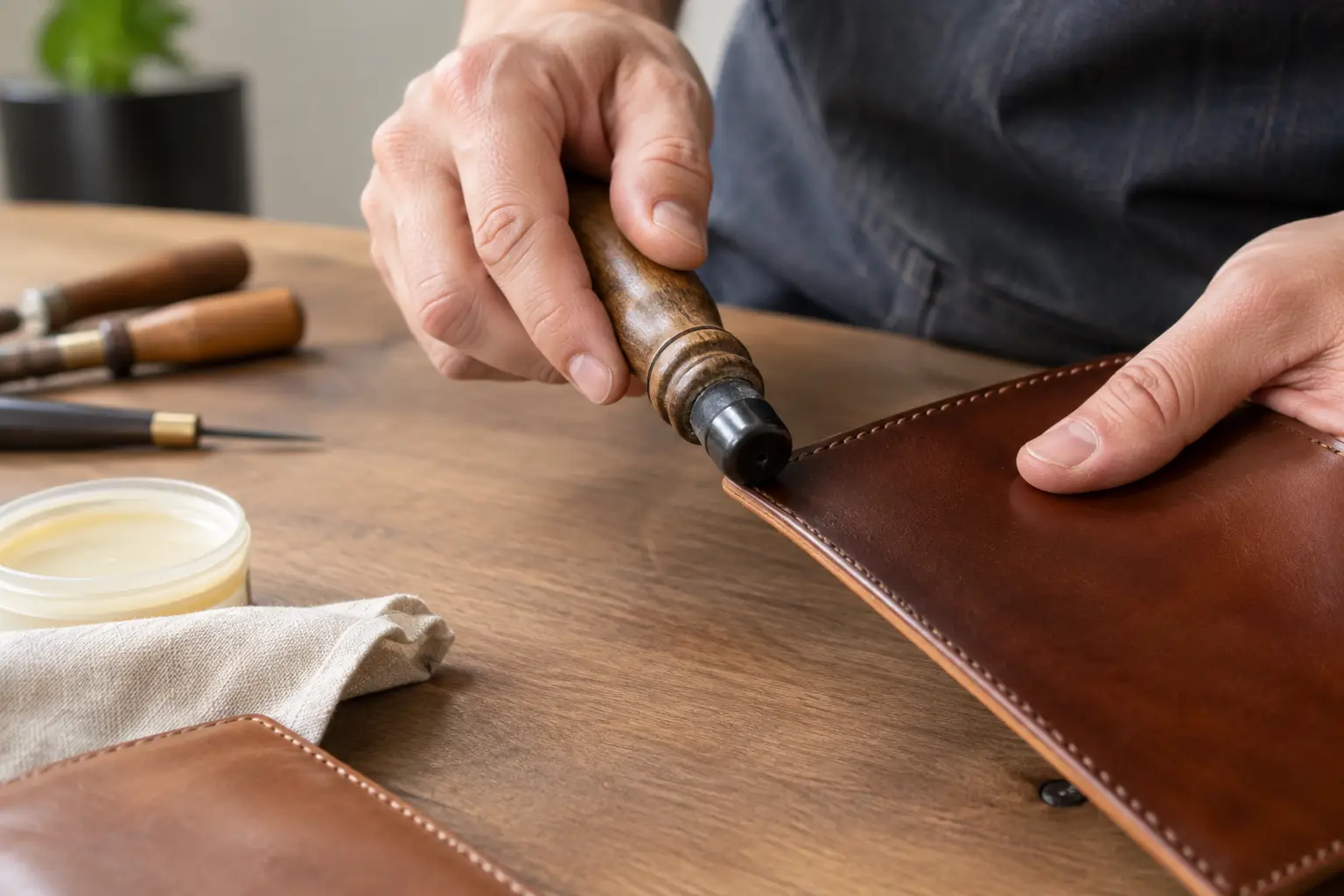
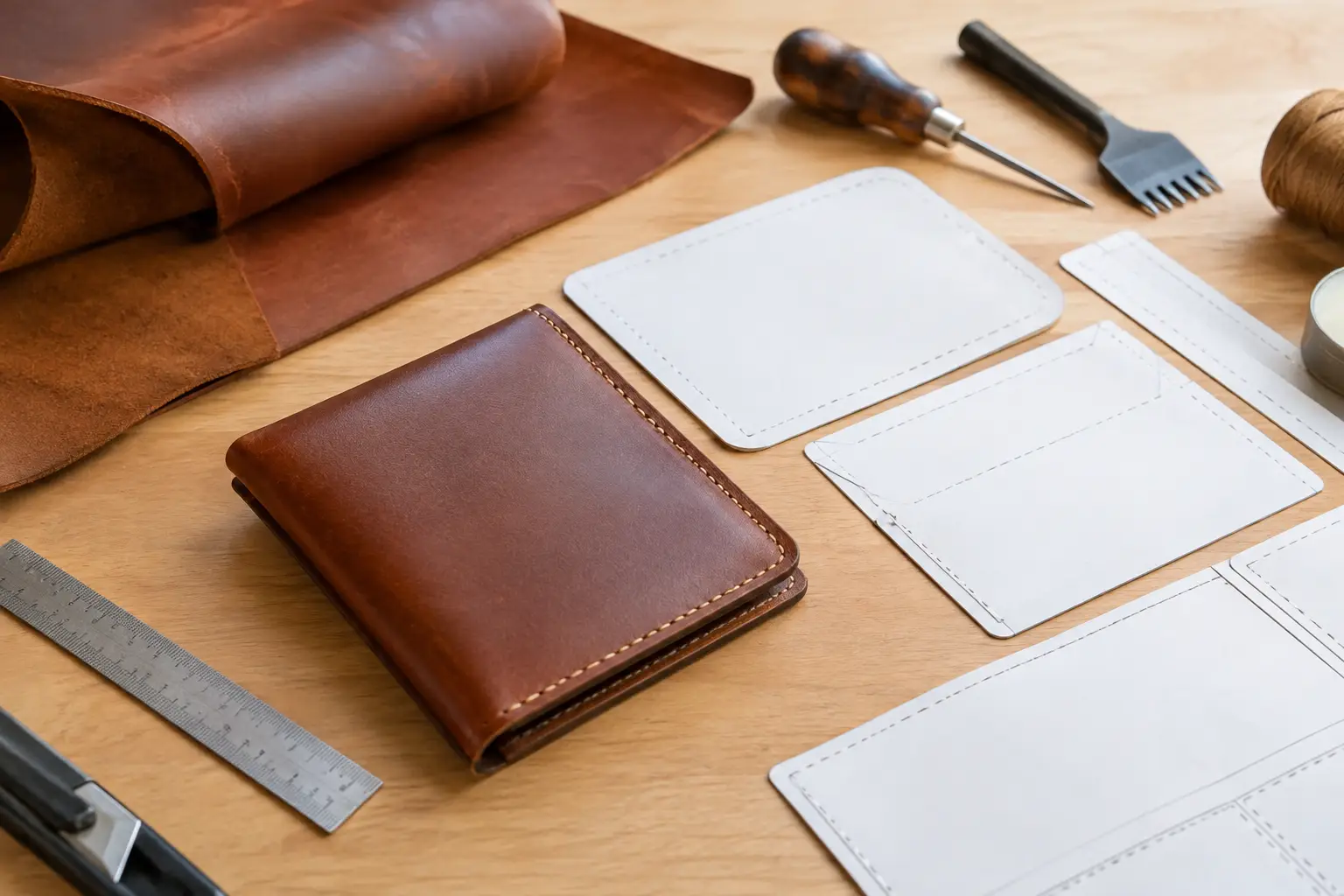
This is also why skiving is such a useful wallet-making skill. Reducing the flesh side at pocket bottoms, seam allowances, folds, and turned edges can remove bulk where it matters while preserving strength in the visible areas. A clean skive lets a wallet close naturally instead of fighting against its own construction.
Before committing to a full hide, stack small offcuts in the same order your pattern uses. Fold them, clip them, and place a few cards between the layers. This quick bench test reveals more than a thickness number alone. You will feel whether the fold wants to sit flat and whether the pockets are becoming too tight.
Match the leather to the wallet style
A slim card wallet and a traditional bifold ask different things of the leather. Using the same weight for both can work, but it may not produce the best result.
For a minimalist card holder, 2 to 3 oz vegetable-tanned leather is often enough for the full build, particularly if the design has two or three pockets and no lining. A firmer leather can keep a small wallet tidy even at a lighter weight. If the leather is very soft, you may want a slightly heavier exterior or a reinforcing layer so the wallet does not collapse around the cards.
For a standard bifold, 3 to 4 oz on the exterior with 2 to 3 oz pockets is a practical balance. If you are adding a full lining, consider dropping the lining to 1.5 to 2 oz. A full 3 oz lining behind several 2 oz pocket layers can make the wallet feel much thicker than expected.
For a rugged field-style wallet or a long wallet meant to have a more substantial feel, 4 to 5 oz can be appropriate on the outside. Use that choice deliberately. Heavier leather will need more careful skiving at folds and seams, and it may require a longer break-in period before it becomes comfortable to carry.
Temper matters as much as ounce weight
Two leathers with the same listed weight can behave very differently. A firm 3 oz vegetable-tanned leather may offer more structure than a soft, stretchy 4 oz chrome-tanned leather. Neither is automatically better, but they belong in different kinds of builds.
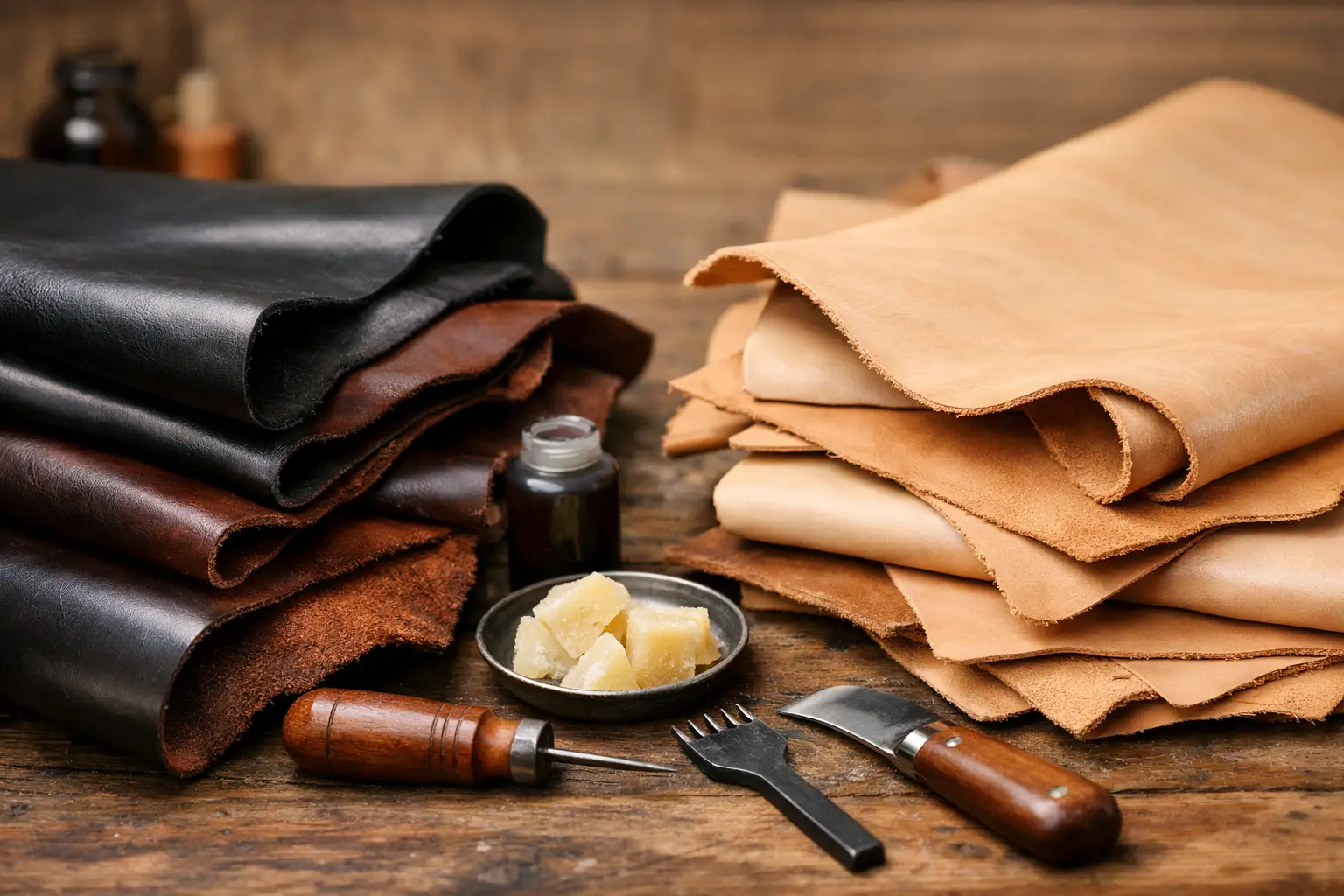
Vegetable-tanned leather is a favorite for wallets because it can be tooled, burnished, molded, and finished with crisp edges. In a medium temper, it makes clean card pockets and well-defined folds. It can also feel stiff at first, especially in thicker weights, so account for that when designing a wallet with many layers.
Chrome-tanned leather often feels softer and more immediately flexible. It can be excellent for lined wallets, soft-folding interiors, and builds where comfort is the priority. However, loose temper leather may need reinforcement at pocket openings or exterior panels to prevent stretching over time.
When selecting leather, handle it the way the wallet will be handled. Bend it sharply. Press a card against it. Fold a sample back on itself. A leather that feels beautiful as a flat panel may not be the right choice once it becomes a working pocket.
Plan for cards, stitching, and the break-in period
Most wallet patterns are drafted around standard card dimensions, but thickness changes how those cards fit. A pocket that seems generously sized before stitching can become snug after the stitch line, edge finishing, and leather compression are complete.
Avoid compensating by making every pocket oversized. Loose pockets can allow cards to shift or slide out. Instead, use leather thin enough for the pocket stack, maintain accurate stitch placement, and remember that vegetable-tanned leather often relaxes slightly with use. Test one pocket first if you are using an unfamiliar hide or making changes to a pattern.
Thread contributes to the finished profile as well. Thick thread can look handsome on a rugged exterior, but it occupies space at every seam. On a refined wallet with thin layers, a more moderate thread size usually creates a cleaner result and helps the pockets sit flatter.
Common thickness choices that cause trouble
Using 4 oz leather for every piece is tempting because it feels durable, but it is rarely the best choice for a multi-pocket wallet. The build can become difficult to stitch at the edges, stiff at the fold, and uncomfortable in a front pocket.
Going too thin has its own trade-off. Leather below 1.5 oz can stretch, wrinkle, or wear quickly when used for an unreinforced exterior or a high-use card pocket. It is useful as a lining or selected reinforcement, but it needs support in areas that take regular stress.
Another issue is mixing leathers without considering their behavior. A firm vegetable-tanned exterior paired with very soft, stretchy pockets can create uneven wear. The exterior may remain crisp while the pocket openings loosen. Choose materials that work together, or reinforce the softer leather where it needs stability.
A few practical questions from the bench
Can I make a wallet with 5 oz leather?
Yes, especially for a simple card case or a rugged, unlined design. For a bifold with several pockets, use 5 oz sparingly or be prepared to skive key areas substantially. The challenge is less about cutting the leather and more about managing the layered construction.
Is 2 oz leather too thin for a wallet exterior?
Not always. A 2 oz exterior can work nicely for a slim wallet, particularly when it is lined or made from a firm leather. On its own, it may feel too flexible for a larger wallet that carries cash and several cards.
Should interior pockets be thinner than the exterior?
Usually, yes. Interior pockets multiply quickly, so reducing their weight is one of the most effective ways to keep a wallet comfortable. A thinner interior also makes pocket openings easier to use after the wallet is stitched and broken in.
A good wallet feels considered before it is even finished. Start with a small stack test, pay attention to every overlap, and choose leather that fits the design you want to carry. That extra few minutes at the bench can save hours of trying to force a bulky build into shape.