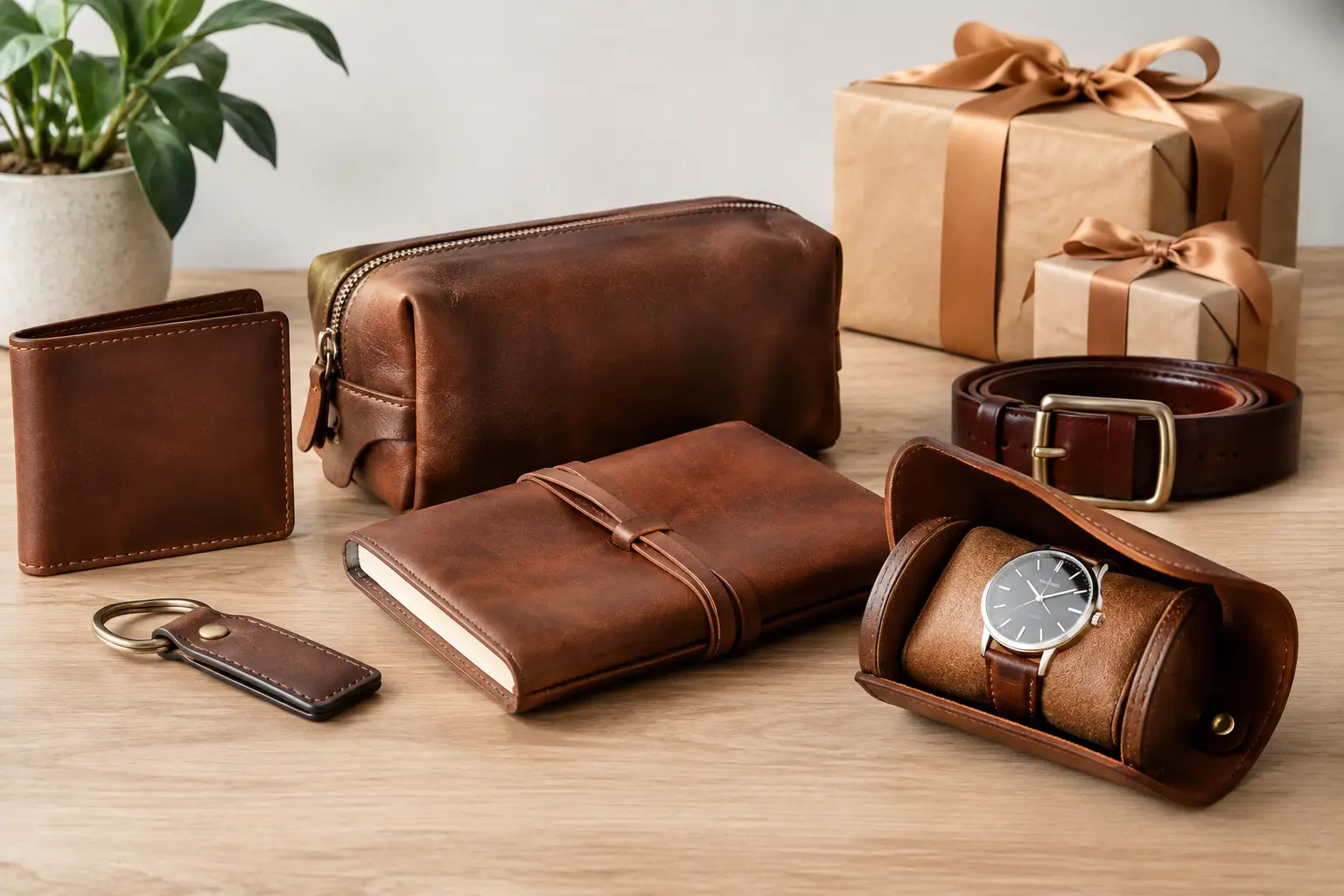
A handmade leather gift earns its place through use. The best leather gifts to make are not necessarily the largest or most elaborate projects. They are the pieces that feel good in the hand, solve a small daily problem, and show the maker paid attention to the person receiving them.
That is good news for any leatherworker. A well-cut card holder, a sturdy valet tray, or a simple key fob can be every bit as memorable as a larger bag. The right project comes down to three things: the recipient’s routine, your current skill level, and the amount of bench time you can realistically give the build.
What Makes a Leather Gift Worth Making?
Leather is already a personal material. It gains character with handling, darkens with age, and records the small marks of ordinary life. A useful item made from quality leather becomes more familiar over time rather than wearing out of favor.
For a gift, usefulness matters more than novelty. Before selecting a pattern or sketching an idea, consider what the recipient carries, sets down, or reaches for every day. A person who travels may appreciate a luggage tag or passport cover. Someone with a cluttered nightstand may get real use from a catchall tray. For a minimalist, a slim wallet may be a better choice than a large organizer with more pockets than they need.
It also helps to choose a project with clean construction. Straight cuts, even stitching, tidy edges, and hardware that suits the design will make a modest project feel considered. A simple gift done carefully is almost always stronger than an ambitious build rushed at the end.
Best Leather Gifts to Make by Skill Level
Key fobs and keychains for a quick, personal build
A leather key fob is a small project, but it gives you room to make thoughtful choices. You can select a color that fits the recipient, add a stamped initial, or use a solid brass, nickel, or black hardware finish that matches their everyday carry.
This is an approachable first gift because it uses little leather and teaches useful fundamentals: cutting clean straps, rounding corners, punching holes, setting hardware, and finishing edges. It is also forgiving. If a first attempt does not meet your standard, you have not lost much material or time.
For a more refined version, use a lined strap or a folded construction with a stitch line around the perimeter. Keep the design restrained. A key fob should feel secure and comfortable, not bulky in a pocket.
Valet trays for the person who likes order
A leather valet tray is one of the most practical gifts a maker can build. It gives keys, coins, watches, earbuds, and pocket tools a clear place to land. On a desk, dresser, or entry table, it quickly becomes part of someone’s routine.
This is especially suitable for beginners because many tray designs begin with a single piece of leather and a few corner fasteners. The work is straightforward, but the finished result looks polished when the layout is balanced and the corners are set consistently.
Choose firmer vegetable-tanned leather if you want a tray that holds its shape well. Softer leather can work for a relaxed look, though it may not sit as crisply at the corners. A free leather tray pattern can be a useful way to practice the process before building a gift in a special leather.
Card holders for an everyday essential
A card holder is a strong choice when you want to make something compact, useful, and distinctly handmade. It is also a project where pattern clarity matters. Pocket placement, stitch spacing, and allowance around card slots all affect how the finished piece feels.
For a first card holder, avoid adding too many pockets. Two exterior slots and a center opening can carry the essentials without making the project thick or difficult to assemble. Thin, firm leather is usually the better choice for pockets, while a slightly heavier backing leather can add structure.
Pay close attention to the edges before stitching. Once the layers are assembled, some areas are harder to refine. Sanding, beveling, and burnishing the exposed pocket edges early will save time and help the finished gift look intentional.
Notebook covers for writers, planners, and list makers
A notebook cover is a generous gift without requiring the complexity of a full bag. It can hold a common pocket notebook, a larger journal, or a refillable insert system. The best size depends on what the recipient actually uses, so check dimensions before cutting leather.
This project offers room for personal details. A name, initials, a short maker’s mark, or a discreet stamped date can make the cover feel one of a kind. Keep decoration away from fold lines and areas that need to bend. Leather will forgive many things, but it will not always fold neatly through heavy tooling or thick layers.
A notebook cover can be made with simple slip pockets, elastic, or a wrap closure. Slip pockets look clean and traditional. Elastic makes changing inserts easy. A wrap strap adds visual presence but takes more material and planning. Pick the construction that fits the recipient’s habits rather than adding features for their own sake.
Belts for a classic, lasting gift
A handmade belt can become a favorite piece of daily wear, but it deserves careful measurement. Unlike a wallet or tray, the fit has to be right. Do not rely on pants size alone. Measure a belt the recipient already wears from the fold at the buckle to the hole they use most often.
Belts are a good project for makers who are comfortable cutting long, straight straps and setting hardware cleanly. The leather should be firm enough to support the buckle without stretching excessively. A properly finished belt also benefits from patient edgework along its full length.
There is no need to overcomplicate it. A well-proportioned strap, a quality buckle, secure keeper, and evenly spaced holes are the details that matter. If you want a safer gift option when sizing is uncertain, a key fob or tray may be the better choice.
Small pouches for tools, cords, or daily carry
A zip pouch, snap pouch, or fold-over utility case makes a useful gift for someone who carries cables, art supplies, grooming items, or small tools. It is a flexible category because you can adjust the size and closure to suit the purpose.
The trade-off is that pouches introduce more construction decisions. Zippers need accurate placement. Gussets require careful cutting. Snap closures need enough structure around them to avoid pulling or distortion. If you are still learning, a simple envelope-style pouch with a snap is a satisfying place to start.
For a more experienced maker, a pouch is an opportunity to combine leathers, add a lining, or create a clean interior finish. Just keep the intended contents in mind. A pouch for cables needs less structure than one meant to protect hand tools.
Choose Leather and Hardware With the Gift in Mind
The material should support the project, not fight it. Vegetable-tanned leather is excellent for trays, belts, stamped details, and projects that benefit from shaped structure. Chrome-tanned leather can be a good fit for soft pouches and relaxed accessories. Many projects work well with a combination of the two, but thickness and temper need to be compatible at the seams.
Color is equally personal. Natural, brown, and black leathers are dependable choices when you do not know someone’s style well. Rich burgundy, olive, navy, or a bright accent can make sense when you do. If the recipient wears silver jewelry or carries matte black gear, matching the hardware finish is a small detail that can make the gift feel especially considered.
Do not overlook thread. A thread color close to the leather keeps the look quiet and classic. Contrast thread highlights the craftsmanship, but it also makes uneven spacing more visible. Choose based on your confidence and the style of the project.
Give Yourself Enough Time for the Finish
The final steps often separate a good leather gift from a gift that feels complete. Cut and punch with enough time left for edge finishing, conditioning, hardware checks, and a last inspection under good light. Look for rough fibers, loose thread ends, uneven burnish, and fingerprints from adhesives or finish.
If you are making a gift for a deadline, build a smaller project than you think you need. A card holder completed with care is better than a notebook cover that still needs its edges finished on the morning of the occasion. Well-organized project patterns can help here by removing some of the guesswork from layout and assembly, leaving more time for the parts of the craft that deserve your attention.
A handmade gift does not need to announce how many hours it took. Let the clean lines, useful design, and honest material do that work. Choose a project that fits your bench, make it with patience, and give someone a piece they will be glad to carry or use for years.