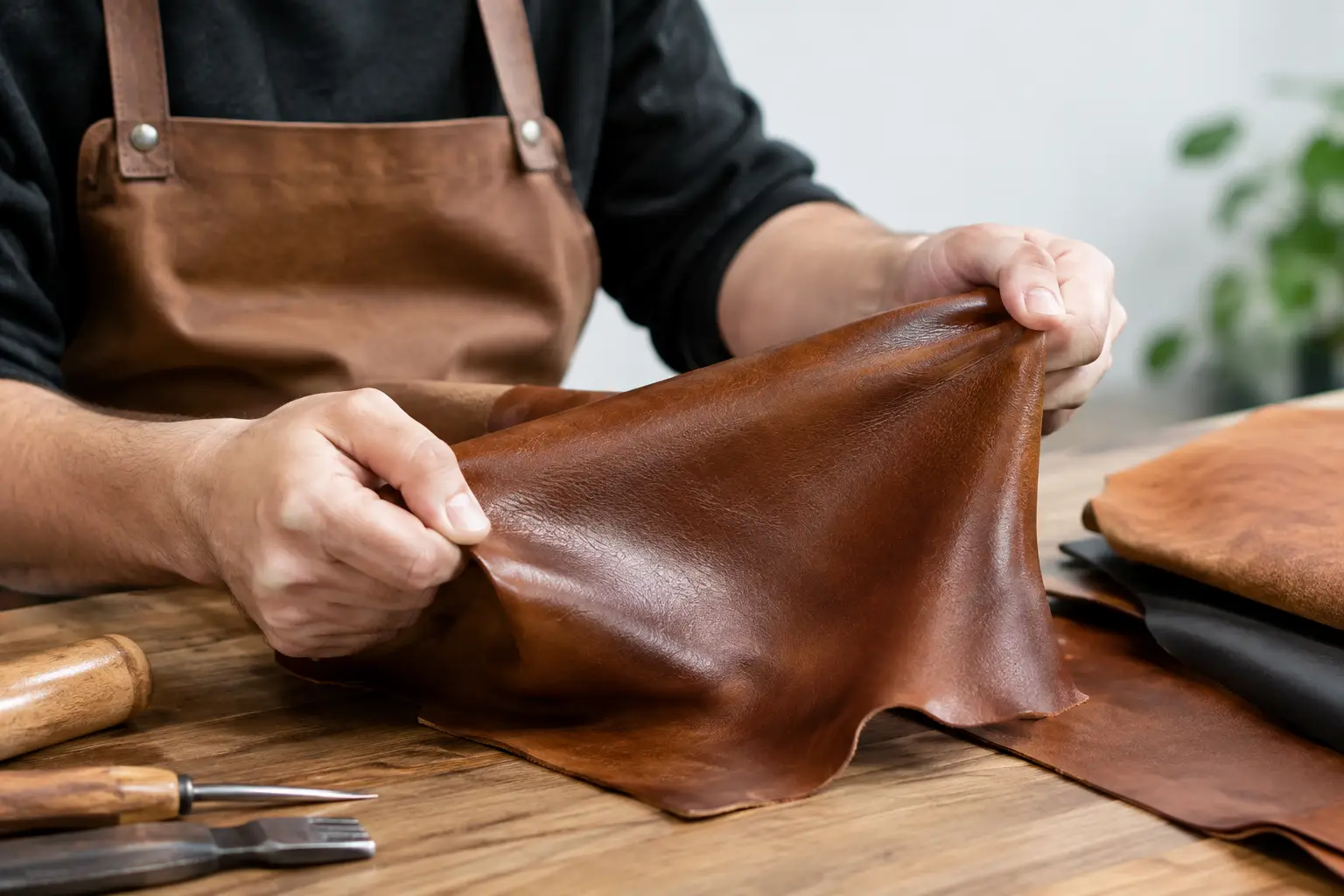
A strap that feels firm at one end and soft at the other can turn a clean build into a frustrating one. If you have asked, why does leather stretch unevenly, the short answer is that leather is natural material with a direction, a history, and different levels of density across every hide. The useful answer is knowing where that variation lives and planning your cuts around it.
Uneven stretch is not always a sign that you bought poor leather or made a mistake. It is often the expected behavior of a material that once moved over an animal’s body. When you learn to read that behavior before cutting, you can make more reliable straps, wallets, cases, trays, and small goods with less time guessing and more time building.
Why Does Leather Stretch Unevenly Across a Hide?
A hide is not uniformly structured like a sheet of plastic or woven fabric. Its fibers are dense and interlocked in some areas, looser and more open in others. That structure changes from the backbone outward, which is why two pieces cut from the same side can respond very differently under tension.
The back and shoulder areas are often firmer, although shoulders can show wrinkles and natural looseness from movement. The belly is usually the stretchiest part of the hide. It has more give because the animal needed that area to flex and expand. The neck can be strong but irregular, with pronounced wrinkles and variable fiber density.
This matters most when a project has parts that must stay consistent. A belt, bag strap, watchband, handle, closure tab, or long narrow panel should generally come from the firmer portions of the hide. A small pocket, lining piece, gusset, or decorative accent can often make good use of areas with more stretch, provided the pattern and purpose allow it.
Leather also has a grain direction. Like wood, it may resist force more effectively in one direction than another. A strip can feel stable when pulled lengthwise yet widen or distort when pulled across its width. If you rotate a pattern piece without considering that direction, two otherwise identical parts may perform differently.
The Factors That Change How Much Leather Moves
Hide location is the starting point, but several other details affect stretch. Understanding them helps you choose leather for the job rather than relying only on thickness.
Tannage and temper
Vegetable-tanned leather is often valued for its ability to mold, carve, burnish, and hold a clean form. In a firmer temper, it is a dependable choice for structured projects. Still, veg tan can stretch noticeably when wet or heavily worked, especially in thinner weights or softer sections of the hide.
Chrome-tanned leather can range from firm to very supple. A soft chrome tan may be ideal for a pouch, garment-style piece, or flexible lining, but it can be less predictable for a strap that needs to hold its length. Combination-tanned and retanned leathers sit somewhere in between, so test the specific hide rather than assuming behavior from the tanning label alone.
Temper describes how soft or firm the leather feels, but it does not tell the whole story. Two leathers with a similar temper can stretch differently because of fiber structure, finish, thickness, and the section of hide you use.
Thickness and splitting
Thicker leather usually resists stretching better than thin leather, but thickness is not a guarantee. A thick belly cut may still stretch more than a thinner strip from a dense back section. Splitting can also expose looser fibers on the flesh side, making a piece feel less stable than it did before.
For parts that need to remain straight and firm, select the best section first, then choose the appropriate weight. Trying to solve a poor cut location only by using heavier leather can add bulk without fully fixing the problem.
Moisture, heat, and handling
Water changes leather. Casing vegetable-tanned leather makes it easier to mold and tool because moisture temporarily relaxes the fibers. That is useful when shaping a holster, a fitted case, or a formed tray. It also means the piece can grow, shift, or dry slightly out of shape if it is not controlled during the process.
Heat, heavy burnishing, repeated flexing, and aggressive handling can have similar effects. A damp strap pulled hard during assembly may dry longer than intended. A pocket opening worked repeatedly with a bone folder may loosen enough to affect fit. These are not reasons to avoid shaping techniques. They are reasons to build allowances and reinforcement into parts that carry stress.
Cutting and construction choices
Even a well-chosen piece can stretch unevenly if the construction concentrates force in one place. A long strap with a narrow buckle fold, a bag handle attached by only a few stitches, or a wallet pocket with a tight curved opening all put localized stress on the leather.
Stitching, adhesives, and hardware can either stabilize the material or create a weak point. A lined strap, for example, distributes tension across more material and usually holds its shape better than a single layer of soft leather. Reinforcement at a snap, rivet, or buckle fold prevents the hole area from elongating over time.
How to Read Leather Before You Cut
You do not need laboratory tools to get better at predicting stretch. A few simple bench checks will tell you a great deal about a hide.
First, look across the grain surface under good light. Notice wrinkles, scars, loose-looking grain, and areas where the surface has a softer, more open appearance. These areas are not automatically unusable. They simply may not be the right place for a load-bearing part.
Next, gently pull the leather in several directions. Use steady pressure rather than a sharp tug. Compare the response near the backbone, shoulder, and belly. You will often feel the difference immediately. Mark the direction of greatest stretch on the flesh side with a light pencil note if the hide will sit on your bench for more than one session.
Then bend a small section and watch the grain. A firm, tight grain usually creases in a more controlled way. Loose grain may wrinkle or lift from the fiber layer beneath it. This is especially helpful when selecting leather for fold lines, card pockets, and polished exterior panels.
If the project must fit another object, make a test piece from the same leather. A short offcut can show whether a snap placement, pocket opening, or folded tab will change size after wet forming or repeated flexing. That small test is usually faster than rebuilding a nearly finished project.
Plan Pattern Pieces Around Stretch Direction
Good patterns provide structure, but your hide selection still guides the final result. Before tracing, identify which pieces need stability and which pieces benefit from flexibility.
Keep long structural parts aligned with the hide’s strongest direction whenever possible. For belts and straps, that generally means cutting long strips along the back rather than across the belly. For bag panels, think about where the weight will pull. A tall tote panel may need its firmer direction running vertically, while a flap may need enough flexibility to close comfortably without becoming limp.
For wallets and card holders, stability matters at pocket mouths, closure tabs, and fold areas. A little give can help a card pocket break in, but too much can make the opening loose early. Use firmer leather for visible exterior pieces and high-wear edges, while saving softer sections for hidden layers or low-stress components.
When a pattern includes mirrored pieces, cut both from similar areas of the hide and keep their grain direction consistent. A left and right strap keeper cut from opposite regions may look alike on day one but age differently. Matching the material is one of the quieter details behind a refined finished result.
Practical Ways to Control Stretch
You cannot remove leather’s natural variation, and you would not want to. That variation gives handmade work its character. You can, however, control how much it affects the build.
For parts under steady tension, use reinforcement. A lining, a firm interlining, or a properly chosen reinforcement strip can keep a strap from lengthening and help handles retain their shape. Choose reinforcement carefully, though. Too much stiffness can make a project uncomfortable to use or difficult to turn and finish.
At hardware points, use washers, backing pieces, or additional layers where the design permits. Punch clean holes that match the hardware size rather than forcing oversized hardware through undersized openings. A hole that is stretched during installation often continues to elongate with use.
During wet forming, shape evenly and let the leather dry in the form that matters. Avoid pulling one side harder than the other. If a project requires a snug fit, allow for the fact that damp leather may relax while you work, then tighten slightly as it dries.
Finally, do not treat every offcut as scrap. Softer belly sections can become excellent practice pieces, small gussets, pull tabs, lining components, or compact projects where flexibility is welcome. Efficient leathercraft is not about demanding that every square inch behave the same. It is about giving each section a job that suits it.
A well-made project begins before the first cut. Take a moment to feel the hide, identify its firm and flexible areas, and place each pattern piece with purpose. That habit builds confidence at the bench and gives the finished piece a better chance to wear exactly as you intended.